Food for Thought
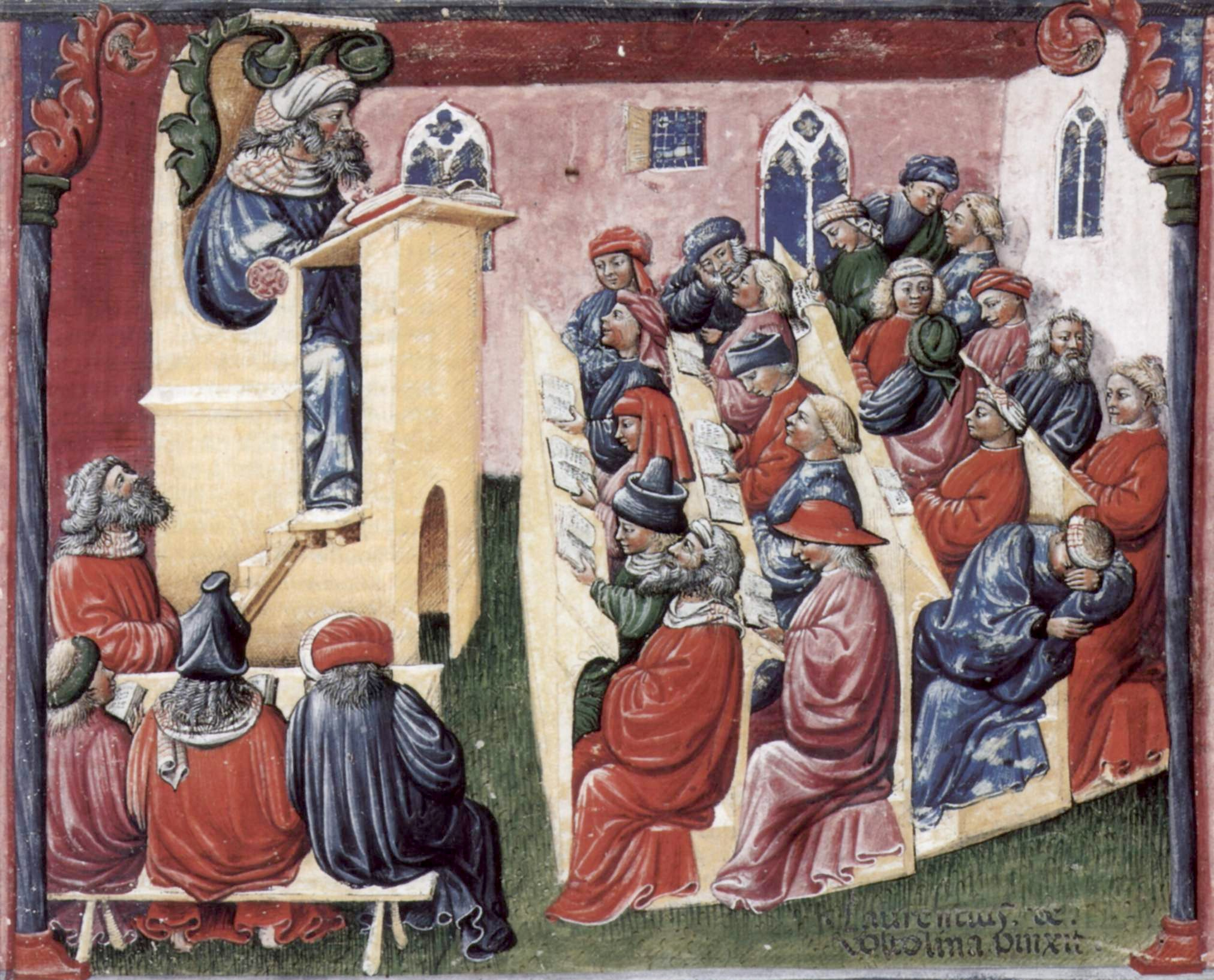
Not much has changed about lecturing over the years, have they?
What this section is about
Since we will be focusing on learning, thinking, problem solving, and similar activities, I thought I should draw your attention to a few ideas that I thought might be helpful.
1 Ockham’s Razor
Ockham’s razor is a problem-solving principle that says:
When you have multiple possible explanations for something, choose the one that makes the fewest assumptions.
This does not mean the simplest explanation is always correct. It simply means that it is often a good starting point until there is evidence to support a more complex explanation.
2 Mathematics
The miracle of the appropriateness of the language of mathematics to the formulation of the laws of physics is a wonderful gift which we neither understand nor deserve.
— Eugene Wigner
The use of mathematics is inevitable in our work. I know some of you might find it daunting, so let me offer a slightly different perspective that might help.
Mathematics is a language: compact, efficient, and exquisitely elegant. Like any other language, it tells stories. But mathematics is special because it can open the door to an entirely new cognitive realm (see Lera Boroditsky’s TED talk for a fascinating take on this).
It is important to remember that knowing mathematics is not the same as being able to produce pages of intricate derivations. If you are not a Mathematics or Physics major, it is often enough to grasp the essence of a concept, such as what differentiation tells us about the relationship between variables. The heavy symbolic lifting can be left to tools such as Mathematica, Maple, Wolfram Alpha, SymPy, or MATLAB.
So whenever you use mathematics, focus on the story the equations are telling. Every time you write one down, pause and ask yourself: what story am I telling here?
3 Learning in an era of Generative AI
I think a lot about learning and how the current pace of progress is influencing the way we learn. I found the following talk by Derek Muller, given at The Perimeter Institute, to be insightful and thought provoking.