Project 2 (35%)
Since You Wanted To Do Research…
You are in SPS because you are exploring the possibility of becoming a scientist. Even if you decide not to pursue a career in science, learning to work, think, and solve problems like a scientist is invaluable and it builds habits of mind and practical skills that are universally applicable and highly transferable.
The projects in 76 (and also in 74, 75, and 72) are designed to help you develop these abilities through authentic, hands-on experiences.
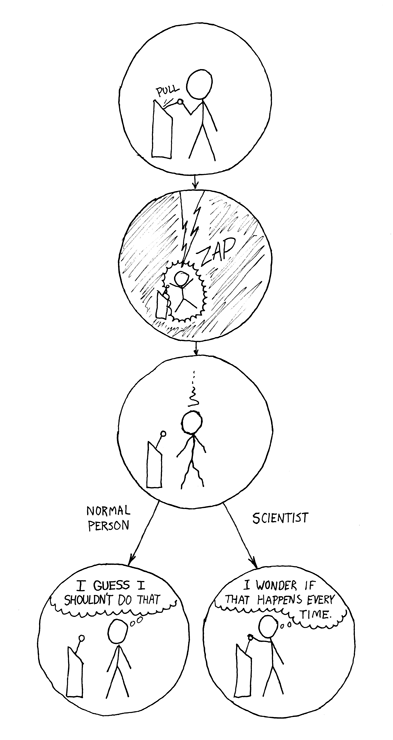
What To Expect In Project 2: A Dose Of Reality
Real equipment
Until now, the activities and projects you have encountered in 76 have been purposefully rough and DIY. In Project 2, things shift. You will now use research-grade instruments, that have high accuracy and reproducibility and work with a level of precision that feels closer to real research. The challenges will be more intricate but also more rewarding.
Options
You will choose one of the following experiments:
- Setting up a microscope based system for particle analysis.
- Setting up a telescope based system for studying periodic variable stars (Offset 20%).
- Setting up a Raspberry Pi based spectrometer (Offset 20%).
Backstory
Each of the projects follow a common back story that goes like…
Imagine that your group has just joined a research lab. Your task is to help a PI (Principal Investigator) set up a new experimental protocol/methodology/instrument so that she can later use to explore other related scientific questions. You are the new recruits, learning the ropes while helping to build something real.
Starting Score Offsets
Not all experiments are created equal; some are trickier than others. The telescope and spectrometer projects are technically more demanding and require more setup time and troubleshooting. To keep things fair, groups choosing either of these will start with 5% from the 25% group component.
Expected Learning
Whichever project you take on, the goal remains the same: to establish a scientific protocol for an instrument that can be used in the lab for others to build on. In the process you will learn how scientists think, work, troubleshoot, and communicate as a team. At its core, this project is about building your confidence to work independently on a complex scientific task while reasoning carefully from data to explanation. There is no fixed recipe you will need to design your own workflow, operate unfamiliar instruments and software, and integrate experimental results with computational analysis. Like all real scientific investigations, you should expect to iterate, troubleshoot, and refine your approach as you go.
Project Details
- Iterative Problem-Solving & Troubleshooting Skills:
Students should design and test multiple methods, learning from failed or partial attempts rather than focusing on perfect results. - Scientific Understanding, Reasoning and Application:
Students should justify why they chose each method, explain its assumptions and limitations, and compare alternatives, where applicable. Scientific concepts are accurate with relevant formulas or equations used that are clearly justified. Connects theory with experimental set up. - Consistent Documentation:
Students should record their approach in a clear and sequential manner: what they tried, what worked or failed, and what they learned each time. - Collaborative Problem-Solving:
Students should delineate clear roles for themselves in their groups, demonstrate initiative, mutual support, sharing insights and collaborating to solve problems. - Scientific Communication:
Students should articulate scientific concepts confidently, clearly, and with the help of diagrams and/or analogies, where applicable. Terminology used is appropriate and relevant - Error Awareness and Quantification:
Where possible, students should identify, estimate, and attempt to reduce sources of error in their approaches.
Each group will be assigned a lab mentor, whom you should consider an extended member of your team.
As in SP3172, we do not expect mentors to have specialised theoretical or experimental knowledge related to your experiment. Their role is not to provide disciplinary expertise but to share their valuable experience from working on their own projects. More specifically, mentors are expected to:
- Ensure student safety during experiments.
- Serve as sanity checks, prompting you to think more deeply about your approaches and results.
- Help you stay focused and realistic, preventing you from straying too far or over-complicating your approach.
- Provide emotional support and manage expectations. We do not expect a polished, fully working final product especially for more complex experiments.
- Encourage reflection and refinement, prompting you to consider how to improve your methods or minimise errors.
- Promote group engagement, identifying quieter members and creating an environment where everyone can contribute and learn.
- Assist only with basic setup tasks (e.g. mounting a telescope, turning on a microscope, ensuring proper alignment).
Having a mentor who is not an expert in your chosen experiment can, in fact, be more valuable. You will have the chance to observe how someone with more experience approaches problem-solving — how they think, prioritise, and persist through challenges.
Developing this problem-solving mindset and temperament, while navigating the dynamics of teamwork, is the most valuable and transferable skill this project can help you build. Try to nurture and cultivate it intentionally.
Teaching and discussing concepts with your peers brings clear mutual benefits — sometimes called Giver’s Gain (see Kobayashi (2019) and Koh, Lee, and Lim (2018)). Group work also helps develop communication, collaboration, and strategic skills that will serve you well in any future career.
Working together on a problem lets you see how others think, learn from their perspectives, and refine your own ideas by defending them. Research shows that STEM students who engage in peer learning groups perform better academically and experience improved well-being (Prof. Peter Felten).
For those tempted to dismiss this as a cliché, let me share something I’ve observed even recently: academic collaborations sometimes break down — or graduate students give up — not because of lack of ability, but because of poor interpersonal skills.
So, welcome this chance to develop self-awareness and reflect on how you communicate and work within a group. This experience won’t fix everything, but it will help.
I also like to distinguish between working as a group and working as a team:
- A group is a temporary, lukewarm marriage of convenience.
- A team is the coming together of like minds in an environment of trust, tolerance, and support.
If you are lucky, you will also enjoy being part of your team.
The benefits of connecting with others extend far beyond grades. I encourage you to explore the free book Connections are Everything, written especially for undergraduates like you.

In research laboratories, progress meetings are a routine part of scientific work. These sessions, typically led by the PI, are where researchers present updates, discuss issues, and receive feedback.
Our assessment for this project mirrors this practice. You will be evaluated through a short presentation and viva session in Week 13.
Please note:
- Your presentation should be no longer than 15 minutes.
- Examiners may adjust the pace if needed.
- The rest of the session will be for questions and discussion.
- All members must present and all members must participate actively in the Q&A.
- Every member is expected to understand all aspects of the experiment, including the theory, software, equipment, and error analysis.
A “Bare-Facts” Presentation
Your group will deliver a 10–15 minute presentation at the start of the viva in Week 13.
This presentation does not need to be flashy or heavily designed — it should simply present the bare facts of your experiment, data, and analysis.
Keep it simple. Use as few slides as you need. Figures and numbers matter more than design or transitions.
Think of it like the kind of update you would give to your PI during a weekly lab meeting: straightforward, concise, and focused on the science.
What to Include
Here are some of the things that you can include in your presentation:
- Objective — a short statement of what you set out to do.
- Experimental setup — a brief description of the apparatus, sample, and key steps.
- Data collected — show raw or minimally processed data (e.g., sample frames, tracking output, graphs).
- Analysis — describe how you processed data, performed calculations, and is possible how you estimated uncertainties.
- Protocols - details of the protocol you have developed and the reasoning that went into it.
- Results (if any) — state your key findings clearly and numerically, including error estimates.
- Limitations and next steps — mention difficulties, limitations, or improvements you would try next time.
Grading Rubric
Science rarely works perfectly on the first attempt or even after years of trying. What truly matters is how you respond to what your data and experience reveal in relation to your goals. Project 2 focuses on your scientific process — how you design, test, and refine your workflow, and how clearly you explain your reasoning. Accordingly, the rubric considers two main aspects: Pipeline (25%) and Personal Growth (10%).
| Pipeline (25%) | Personal Growth (10%) | |
|---|---|---|
| Description | How well your experimental protocol or workflow is designed, tested, refined, and justified. We are looking for clarity, reflection, and transparency — that sense that another scientist could reproduce your work and understand the thinking behind it. | How effectively you, as an individual, have developed in scientific knowledge, practical skills, and scientific temperament. |
| Assessment | Assessed as a group | Assessed individually |
Here are the criteria we are interested in. The first, Pipeline criterion reflects collective group effort in designing and optimising the experiment. All other criteria are assessed both at the group and individual levels to capture collaboration and individual growth.
| Needs Improvement | Satisfactory | Good | Accomplished | Distinguished | |
|---|---|---|---|---|---|
| Quality of the Protocol / Pipeline (Applicable to the Group) |
■ Workflow is incomplete or inconsistent ■ Steps lack logic or clear purpose ■ Parameters and methods not recorded or controlled ■ Results are unreliable or unreproducible |
■ Basic workflow exists but with gaps or unclear rationale ■ Some parameters identified but inconsistently applied ■ Protocol produces partial or variable results |
■ Clear, functional workflow ■ Steps mostly logical and justified ■ Evidence of testing and adjustment ■ Results generally reproducible but not fully optimised |
■ Well-structured, coherent, and efficient protocol ■ Each step has a clear purpose supported by reasoning ■ Refinements guided by data or observation ■ Produces consistent and reliable results |
■ Protocol shows depth of understanding and deliberate design ■ Refinement is systematic, data-driven, and clearly justified ■ Workflow is robust, efficient, and adaptable ■ Demonstrates insight into sources of error and limits of reproducibility |
| Scientific Understanding & Application | ■ Misunderstands key concepts ■ Explanations are vague or incorrect ■ Cannot relate theory to experiment and/or overcomplicates setup |
■ Understands terms but struggles to apply them ■ Explanations are shallow or incomplete ■ Some conceptual confusion or unnecessary complexity in setup |
■ Understands core concepts ■ Explains theory in own words ■ Connects theory to experiment with minor gaps or overcomplications |
■ Applies theory clearly and appropriately ■ Explains how concepts influence design and outcomes ■ Identifies assumptions or limitations |
■ Demonstrates deep and integrated understanding ■ Explains abstract ideas with clarity and accuracy ■ Connects theory beyond the immediate experimental context |
| Iterative Problem-Solving & Troubleshooting Skills | ■ Passive or unreactive when problems arise ■ Fails to identify key issues ■ No evidence of refinement ■ Depends entirely on others |
■ Recognises issues but responds inconsistently ■ Suggests superficial fixes ■ Trial-and-error without learning ■ Needs prompting to adjust setup |
■ Identifies and responds to problems ■ Contributes to adjustments ■ Shows basic understanding of cause and effect |
■ Diagnoses and resolves issues thoughtfully ■ Uses observations or feedback to guide refinement ■ Acts independently when improving setup |
■ Anticipates and addresses problems proactively ■ Strategically applies theory in troubleshooting ■ Demonstrates purposeful, effective iteration |
| Scientific Communication & Reasoning | ■ Completely misunderstands or misuses terminology ■ Difficult to follow; disorganised or unsupported ideas ■ Avoids questions or gives unclear responses despite prompting |
■ Often uses inappropriate terminology ■ Communicates basic points with limited structure ■ Reasoning valid only sometimes; ideas may be shallow or inconsistent ■ Needs prompting to clarify |
■ Occasionally uses inappropriate terminology ■ Generally clear and structured communication ■ Reasoning mostly valid and sound ■ Responds to most questions with some confidence |
■ Consistently uses appropriate terminology ■ Easy to follow, clear, and logically structured responses ■ Reasoning valid and sound ■ Communicates confidently with minimal prompting |
■ Always uses precise terminology ■ Articulates complex ideas with clarity and insight ■ Demonstrates coherent, well-supported reasoning ■ Communicates confidently and independently |
| Error Awareness & Quantification | ■ No attention given to possible sources of error ■ No attempt to estimate or quantify errors |
■ Identifies some sources of error ■ Limited or inconsistent quantification of errors |
■ Identifies several relevant sources of error and their contributions ■ Some attempt to quantify errors where applicable |
■ Systematically identifies and explains relevant sources of error and their likely impact ■ Most key errors are quantified clearly and appropriately |
■ Comprehensive and precise identification of all relevant error sources ■ All significant errors quantified with justification and awareness of limitations |