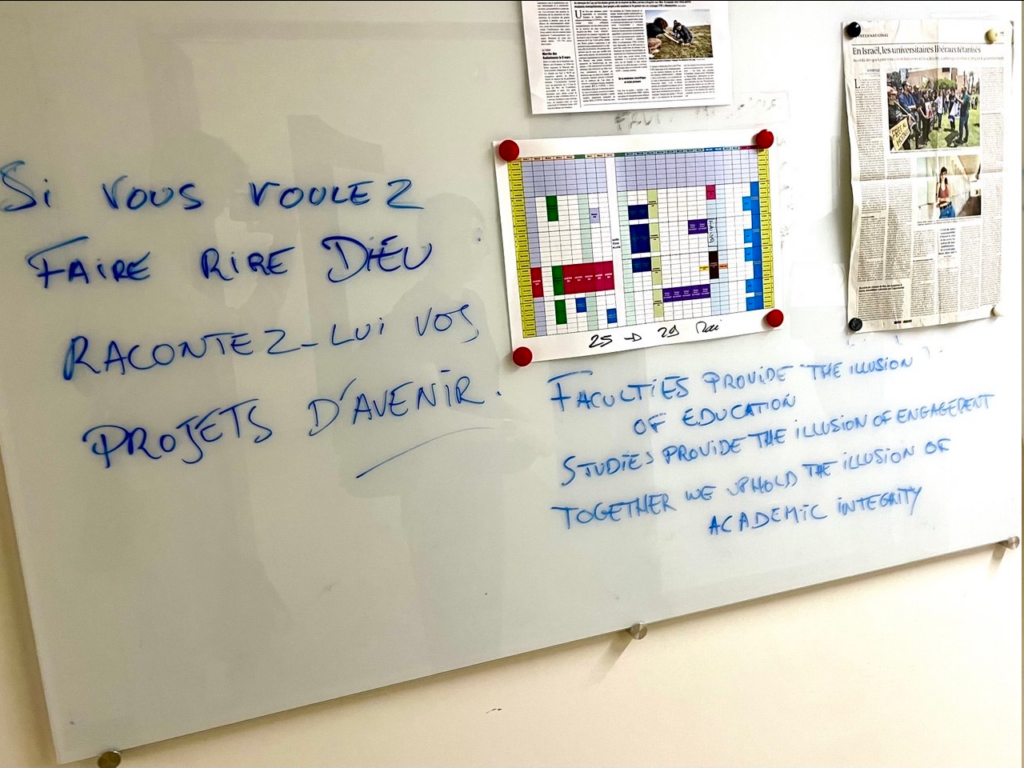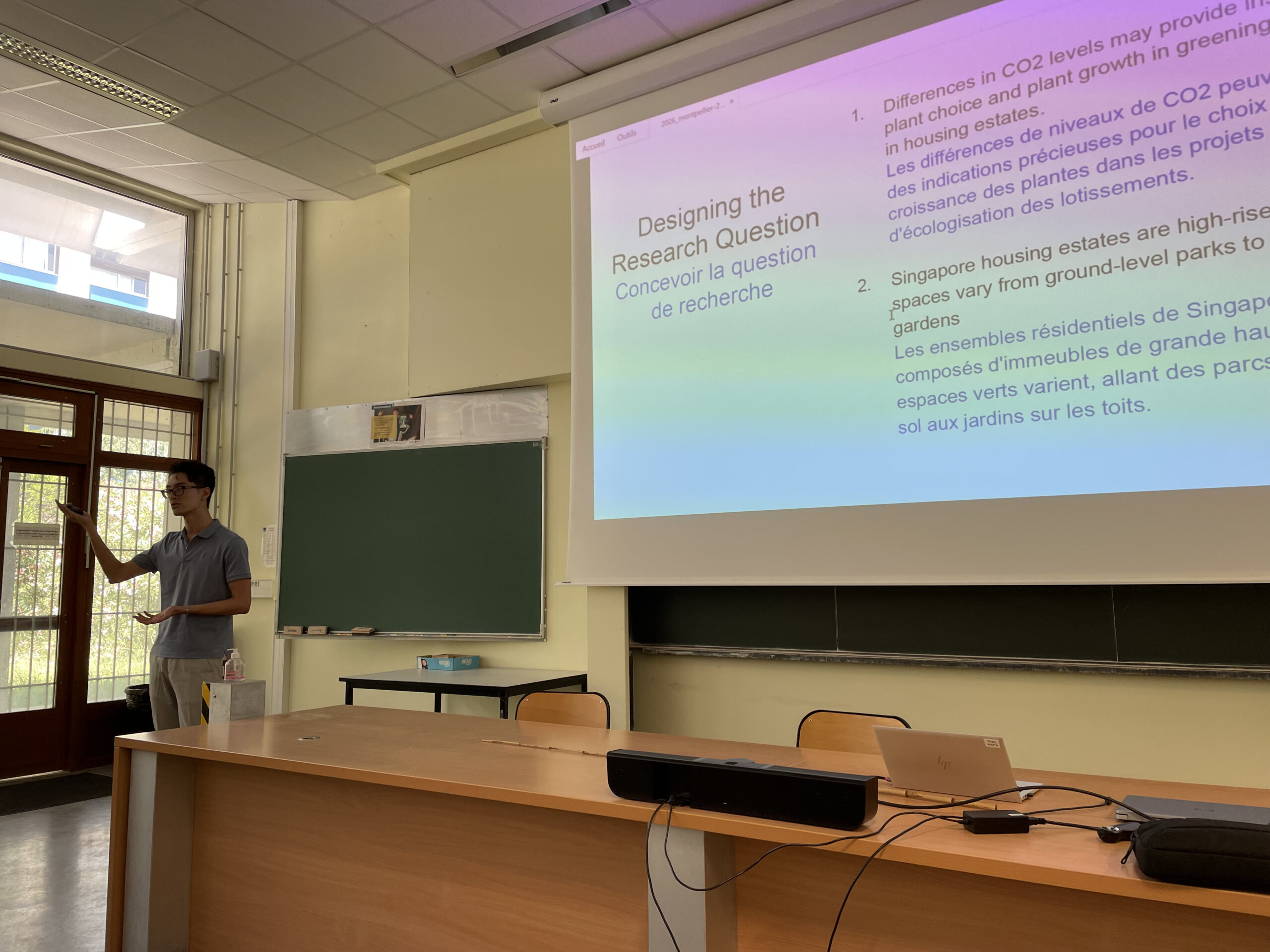
In May 2026, Special Programme in Science alumnus Ryan Shawn Phillips joined Dr Linda Sellou from the NUS Department of Chemistry to co-organize and facilitate a three-day international workshop on environmental sciences and sustainability at Montpellier. Conducted as a collaborative effort between the Special Programme in Science, Dr Marine Dwzick from the Centre for Functional and Evolutionary Ecology, and Dr Frédérique Carcaillet, Vice President for Environmental Issues at the University of Montpellier, the workshop brought together five instructors and over 20 students. The initiative provided a vibrant platform for participants from Singapore and Montpellier to share their ongoing research, exchange innovative ideas, and lay the groundwork for future institutional partnerships.
Central to the workshop was the topic of environmental monitoring, with an emphasis on carbon dioxide concentrations and temperature. Ultimately, these sessions aimed to initiate a common field protocol that would enable direct comparison between environmental datasets collected in Singapore and Montpellier.
During the event, Ryan delivered a presentation detailing his undergraduate research project, which investigated carbon dioxide concentrations across different elevations at Mount Faber Park in Singapore. In this group project, he and his team designed their setup around two practical goals: making environmental monitoring affordable and keeping the equipment straightforward to set up and operate. The resulting compact system paired a K30 non-dispersive infrared carbon dioxide sensor module with a BME680 temperature sensor module connected to a Raspberry Pi, driven by custom Python scripts to manage data collection. This approach demonstrated that reliable environmental data could be gathered efficiently without relying on expensive, heavy laboratory instrumentation.
Expanding on this work, Phillips also examined the research project from the perspective of an educator, discussing the core learning outcomes intended for students. These included designing a targeted measurement strategy, collecting and managing data, troubleshooting equipment failures directly in the field, analyzing and visualizing results, and communicating scientific findings effectively. Engaging with educators in Montpellier revealed fascinating differences in educational structures. While similar research tasks at NUS are often handled end-to-end by student groups, European programs sometimes distribute distinct aspects of such projects across different departments where students contribute their specialized areas of expertise. This contrast highlighted the unique breadth of skills students develop when navigating the entire research lifecycle, while also prompting reflection on whether students fully recognize the diverse competencies they build through such demanding experiences.
The event concluded with an engaging round-table discussion among staff, faculty, and students to refine experimental methodologies and brainstorm joint research frameworks. Looking forward, the team hopes these initial discussions will lay the foundation for a shared environmental observatory, opening up new avenues for cross-cultural student learning and joint research down the road.